
What Type of Doctor Should I See for Back Pain?
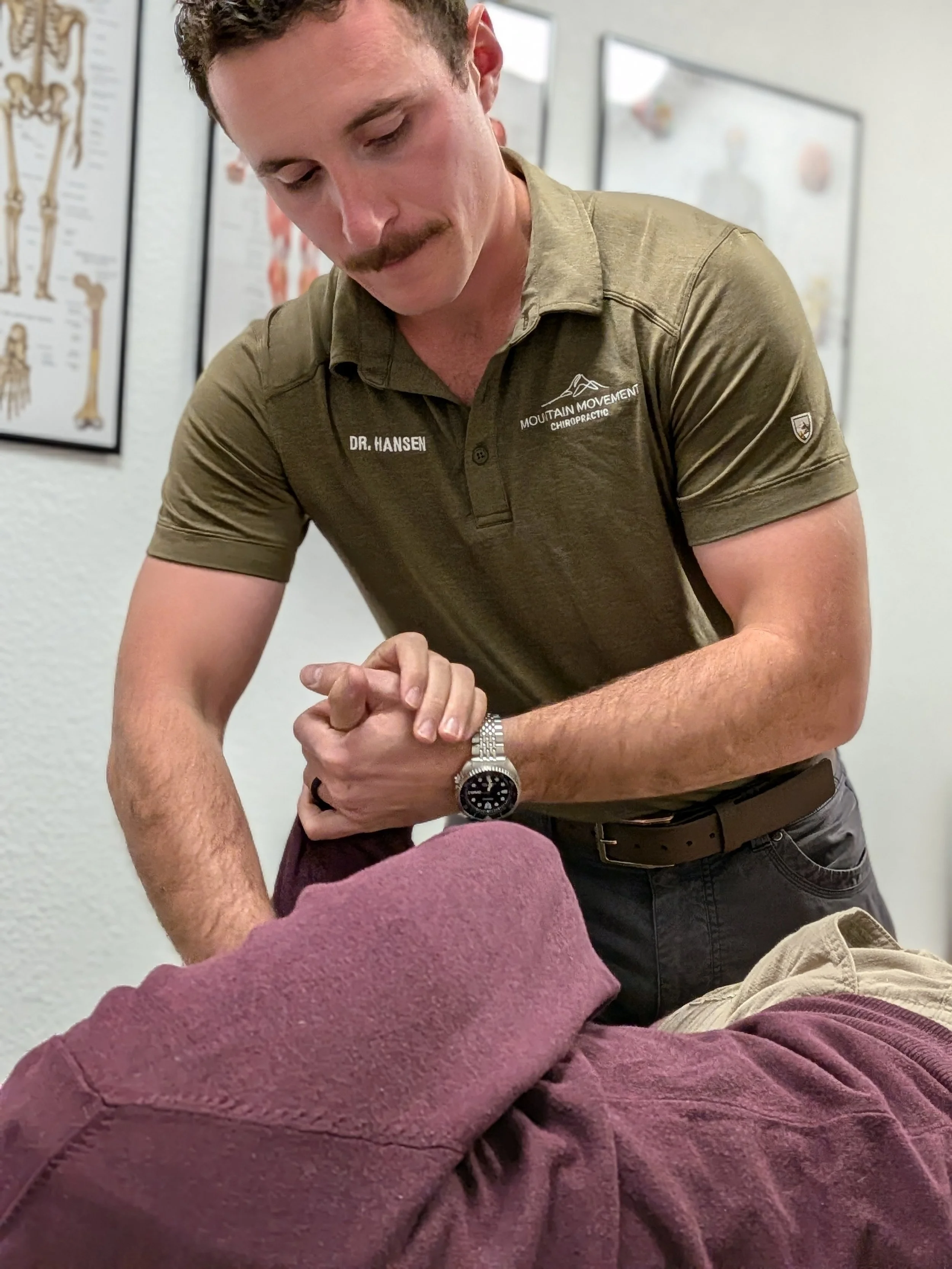
When your back starts hurting, it can be hard to know where to go first. Do you call your primary care doctor? Go to urgent care? See a physical therapist? Schedule with an orthopedic specialist? Or start with a chiropractor?
At Mountain Movement Chiropractic, my opinion is simple: for most back pain, a chiropractor is a great place to start. Chiropractors are trained to evaluate the spine, muscles, joints, and nervous system. More importantly, a good chiropractor can help direct traffic. That means we can treat conservatively when appropriate, refer to physical therapy if you need more exercise-based rehab, send you to urgent care if medication may help calm things down, or refer to an orthopedic specialist if your case needs a surgical opinion.
The goal is not to keep every patient in our office. The goal is to get each patient to the right care at the right time.
Why Starting With a Chiropractor Makes Sense
Back pain is often related to how the spine, hips, joints, muscles, and nerves are functioning together. Chiropractors specialize in the musculoskeletal system and nervous system, which puts us in a strong position to perform the initial assessment.
At Mountain Movement Chiropractic, we are not just interested in the exact spot that hurts. Pain matters, but it is often the last thing to show up and the first thing to calm down. If we only chase pain, the problem may return. That is why we look at how your whole spine and body are moving so we can help address the underlying cause, not just the symptom.
For many patients, pain improves within a few visits. But if the root cause is not addressed, the same issue often comes back later.
When Back Pain Needs Medical Evaluation
Most back pain is not dangerous, but there are times when symptoms may point to something more serious. Red flags include signs that could suggest infection, cancer, fracture, severe nerve compression, or other conditions that require medical evaluation.
This is one reason it helps to start with someone who knows what to look for. Evidence-based guidelines generally recommend avoiding routine imaging for uncomplicated low back pain unless there are concerns for serious causes such as fracture, infection, malignancy, or cauda equina syndrome.
A recent example from our office involved a patient who came in for back pain but had a few odd symptoms that did not fit the normal pattern. Instead of treating and hoping for the best, we referred them to an orthopedic specialist. It turned out they had a bone infection in the spine. If that had been missed, it could have caused serious damage.
That is what “directing traffic” means. Sometimes, the best chiropractic care is knowing when the patient needs someone else.
The Problem With the Typical Back Pain Path
Too many people suffer with back pain longer than they need to because they do not know where to start. They may ignore it, cover it up with medication, jump straight to imaging, or assume surgery is the only answer.
Think of it like a nail that is sticking slightly out of a board. Conservative care is like using the right-sized hammer to tap it back into place. Medication may help quiet the pain, but it is like putting a towel over the nail so you do not see it. Imaging is like taking a picture of the nail. Surgery, when truly needed, can be life-changing, but for many common back pain cases, it may be more like reaching for a sledgehammer before trying the right tool.
There is a time and place for medication, imaging, injections, and surgery. But for many people, conservative care is the best first step.
A Real-World Example of Starting With Conservative Care
I recently saw a patient who had just returned from a long flight and experienced their first major back flare-up. They had never been to a chiropractor before and were unsure what to expect. After a proper evaluation and treatment, we were able to reduce their pain significantly within a couple of days.
Now that the pain is calming down, the focus has shifted to correcting the underlying issue so it does not keep coming back. That is the difference between short-term relief and long-term improvement.
What About Primary Care, Physical Therapy, Urgent Care, or Orthopedics?
Each provider has a role. A primary care doctor is helpful for managing medical conditions, medications, and broader health concerns. Urgent care can be useful when pain is severe and a short course of medication is needed to calm things down. Physical therapy can be a great option when a patient needs more exercise-based rehabilitation. Orthopedics is appropriate when there may be a structural issue that requires surgical consultation.
The challenge is that patients are often left trying to decide all of this on their own. A chiropractor who performs a thorough exam can help you understand where you fit and what the next best step should be.
You Deserve the Right Care, Not Just Any Care
Back pain can be frustrating, but you should not have to guess your way through the healthcare system. Starting with a chiropractor gives you a conservative first step and a provider who can help determine whether your case belongs in our office or somewhere else.
If your back hurts and you are not sure where to start, we are here to evaluate, guide, and help you move in the right direction.
📍 Mountain Movement Chiropractic – Spearfish, SD
📅 Schedule an Appointment Today!