
How to Prevent Lower Back Pain From Sitting All Day
If your lower back feels stiff after sitting all day, you are not alone. This is one of the most common problems we see at Mountain Movement Chiropractic. Many patients describe the same pattern. They sit for work, drive for long periods, or spend time at a computer, and their back slowly tightens up. Then, when they finally stand up, they feel stiff until they walk around for a bit.
The good news is that sitting itself is not the enemy. Staying still for too long is usually the bigger problem. Your body was built to move, and when it does not get enough movement throughout the day, your lower back often becomes the first place you notice it.
Why Sitting Can Make Your Lower Back Stiff
When you sit for long periods, your hips stay flexed, your spine stays in a relatively fixed position, and your muscles are not moving through their normal ranges. Over time, the joints in your lower back and hips get less motion, circulation decreases, and the muscles around your spine begin to tighten.
This is why so many people feel better after walking. Walking restores movement, improves circulation, and helps the hips and spine loosen up. If your back pain improves once you get moving, that is often a sign that your body needs more frequent movement during the day.
Your Desk Setup Still Matters
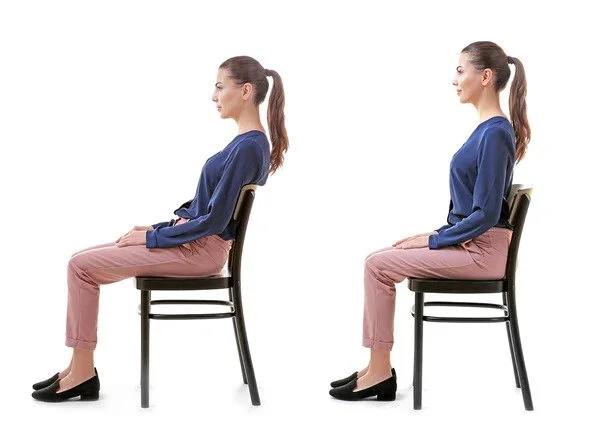
While movement is the most important part, your desk setup can either help or hurt. A good starting point is to sit with your knees, hips, and elbows close to 90 degrees. Your feet should rest comfortably on the floor, and your monitor should be at eye level and directly in front of you.
That last part matters more than many people realize. I once had a patient who consistently came in with right-sided neck pain. After asking more about their work setup, we found that their monitor was positioned off to the right. They also had to turn that same direction repeatedly to greet customers coming through the door. By simply moving the monitor directly in front of them, their neck pain decreased significantly.
Small changes in position can add up, especially when repeated for hours every day.
The Best Posture Is the One You Do Not Stay In Too Long
A perfect chair or perfect posture will not fix everything if you stay in one position all day. Even a technically “good” position can become irritating if your body never gets a break from it.
Instead of trying to sit perfectly for eight hours, focus on changing positions often. Sit for a while, stand for a while, walk for a few minutes, then sit again. Your body likes variety. Different positions load different tissues, which helps prevent one area from getting overworked.
Take Movement Breaks Every Hour
One of the simplest ways to prevent lower back pain from sitting is to take a short movement break every hour. It does not need to be complicated. Stand up, walk around, do a few gentle back bends, stretch your hips, or move through a quick routine that helps your body reset.
Even one to two minutes of movement can make a big difference when done consistently. The goal is not to turn your workday into a workout. The goal is to remind your joints and muscles that they are meant to move.
Try Working From Different Positions
If possible, change your work position throughout the day. A standing desk can help, but it is not required. You can take phone calls while standing, read documents at a counter, or move your laptop to a different setup for a short period.
The key is to avoid spending the entire day in the same posture. Sitting is fine. Standing is fine. Walking is great. The problem is getting stuck in any one position for too long.
Use Stretching as a Reset, Not a Cure-All
Stretching can be very helpful for people who sit all day, especially when it targets the hips, low back, and upper back. A short stretch routine before work, during lunch, or after the workday can help reduce stiffness and improve comfort.
But stretching works best when it is paired with frequent movement. If you stretch once at night but stay still for eight hours during the day, your back may continue to feel tight. Think of stretching as one tool in the plan, not the entire solution.
How Chiropractic Care Can Help
If your lower back continues to feel stiff or painful despite improving your desk setup and adding movement breaks, it may be time to get evaluated. Sitting can reveal underlying movement restrictions in the spine, hips, and pelvis.
At Mountain Movement Chiropractic, we look at how your body moves as a whole. The goal is not just to reduce pain temporarily. The goal is to restore motion, improve function, and help you build habits that keep the problem from coming back.
Your Back Needs Movement
Lower back pain from sitting all day is common, but it is not something you have to accept. Better ergonomics can help. Stretching can help. Chiropractic care can help. But the biggest takeaway is simple: sitting is not bad, staying still is.
If your back feels stiff after long days at a desk, we are here to help you move better, feel better, and stay active.
📍 Mountain Movement Chiropractic – Spearfish, SD
📅 Schedule an Appointment Today!